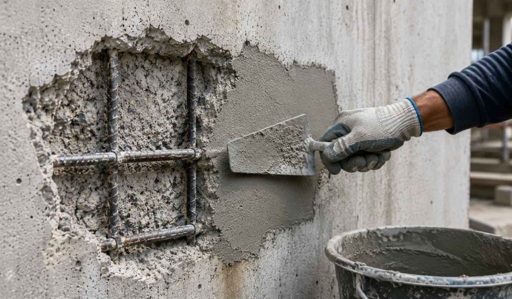
The central principle is simple: adding water to restore slump can increase the water–cementitious ratio and reduce concrete quality. Water-reducing admixtures instead allow the same workability with less water, or greater workability without increasing water. Lower water demand can support lower permeability, higher strength and improved durability when the overall mix design and curing are properly controlled.
1. Workability without uncontrolled water addition
Concrete must remain workable enough for mixing, transport, pumping, placing, compaction and finishing. Water-reducing admixtures can improve flow and workability without increasing mixing water; alternatively, they can maintain a target slump while reducing water content.
Practical advice: If slump falls during delivery or placing, do not automatically add water. Confirm the mix design, elapsed time, concrete temperature, admixture compatibility and approved site-adjustment procedure.
2. Strength and durability begin with water control
For a given cementitious content, lowering the water–cementitious ratio is a key route to higher-strength and more durable concrete. A lower ratio can reduce permeability and slow the ingress of water, oxygen, carbon dioxide and dissolved salts—factors connected with deterioration and reinforcement corrosion.
3. Better placing, pumping and finishing
Appropriate admixture selection can improve cohesiveness, pumpability, finishability and slump control while reducing segregation and bleeding. These are not only laboratory benefits; they directly affect placement quality and site productivity.
4. Set-time control for project conditions
Concrete projects face different temperature, delivery, placement and finishing conditions. Set-controlling admixtures help the mix design respond to these jobsite requirements, but selection must be tested with the actual cement, supplementary materials, aggregates, water, temperature conditions and intended dosage.
5. Economy and cement efficiency
Water reducers can be used to improve workability, improve strength through lower water content or—where permitted by the specification—optimise cement and water content while maintaining required performance. The objective should be performance and compliance, not simply lowest initial cost.
Before selecting an admixture, define
- Required concrete grade, exposure class, durability target and service life.
- Cement type, supplementary cementitious materials, aggregate grading and mixing-water quality.
- Required slump or flow at batching and at placement.
- Transport time, concrete temperature, ambient conditions and method of placement.
- Pumping, finishing, early-strength, setting-time and formwork-removal requirements.
- Applicable project specification, standard and approved trial-mix criteria.
What ChemBeton QC & R&D can offer
- Raw-material compatibility review for cement, SCMs, aggregates, water and admixture systems.
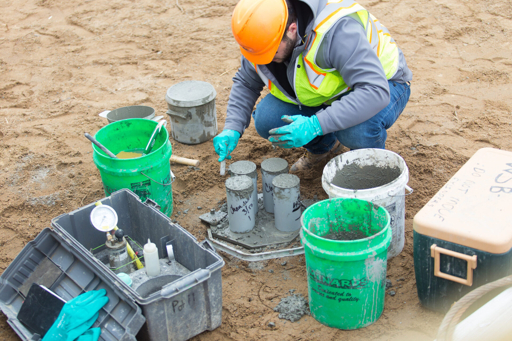
- Laboratory trial mixes to evaluate water reduction, workability retention, setting behaviour, density, air content, strength development and durability-related indicators.
- Dosage optimisation for local climate, transport time and placing conditions.
- Plant and site trials to validate batching sequence, pumpability, slump retention, finishing and curing requirements.
- Batch-control guidance, retained samples, technical reporting and troubleshooting support.
Conclusion
The right admixture is not a substitute for correct concrete design, production control, placing, compaction or curing. It is a performance tool that helps the complete concrete system work more reliably.
Through controlled trials and application support, ChemBeton helps producers and contractors select admixture systems that meet the required fresh and hardened concrete performance for real project conditions.